AI Insights
DeepLumen Blog
Insights on AI marketing, agentic automation, and e-commerce growth.
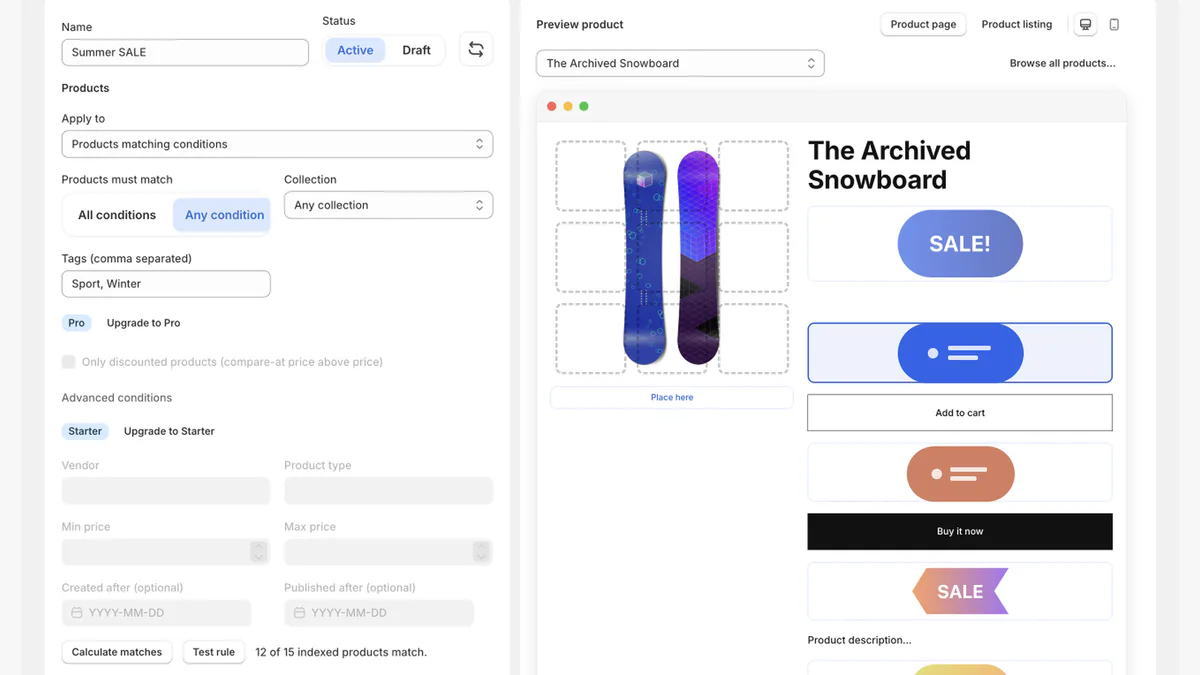
How to Target Shopify Badges by Product or Collection
Learn how to target Shopify badges by product, collection, or tag, calculate matches, check exclusions, preview mobile layouts, and verify the live storefront.
 DeepLumenSep 05, 2026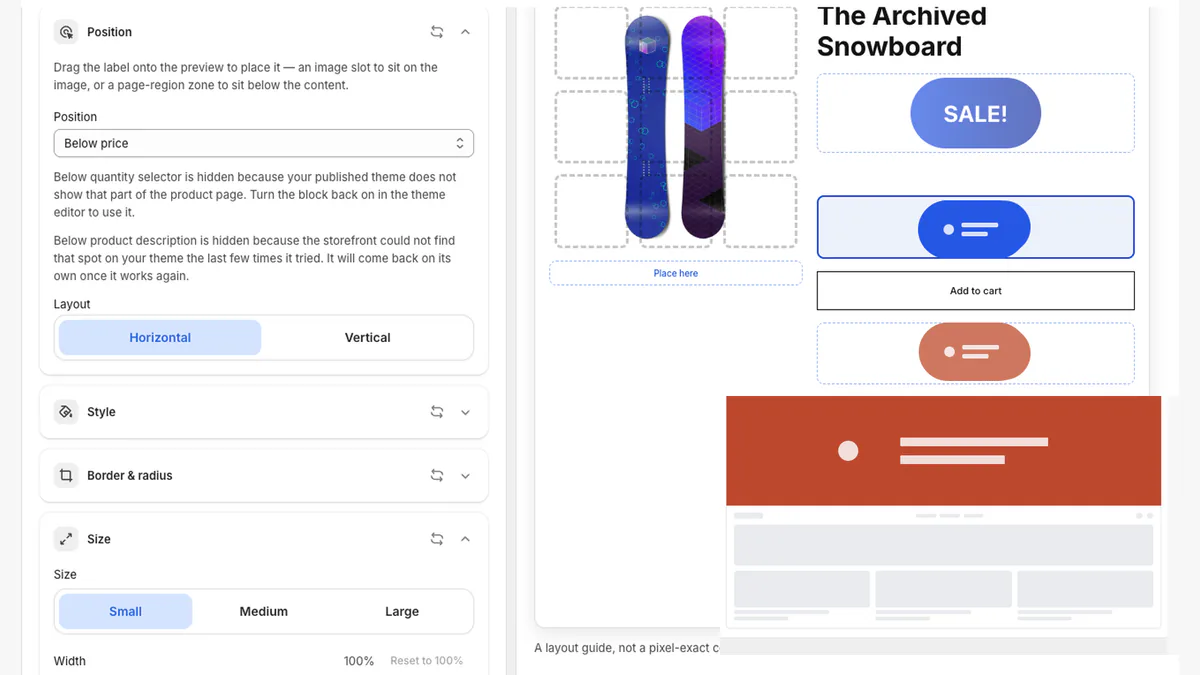
Shopify Product Labels vs Badges: What to Use
Compare Shopify product labels, sale badges, trust icons, and announcement banners. Learn what each element does, where it belongs, and when to combine them.
DeepLumen Sep 05, 2026 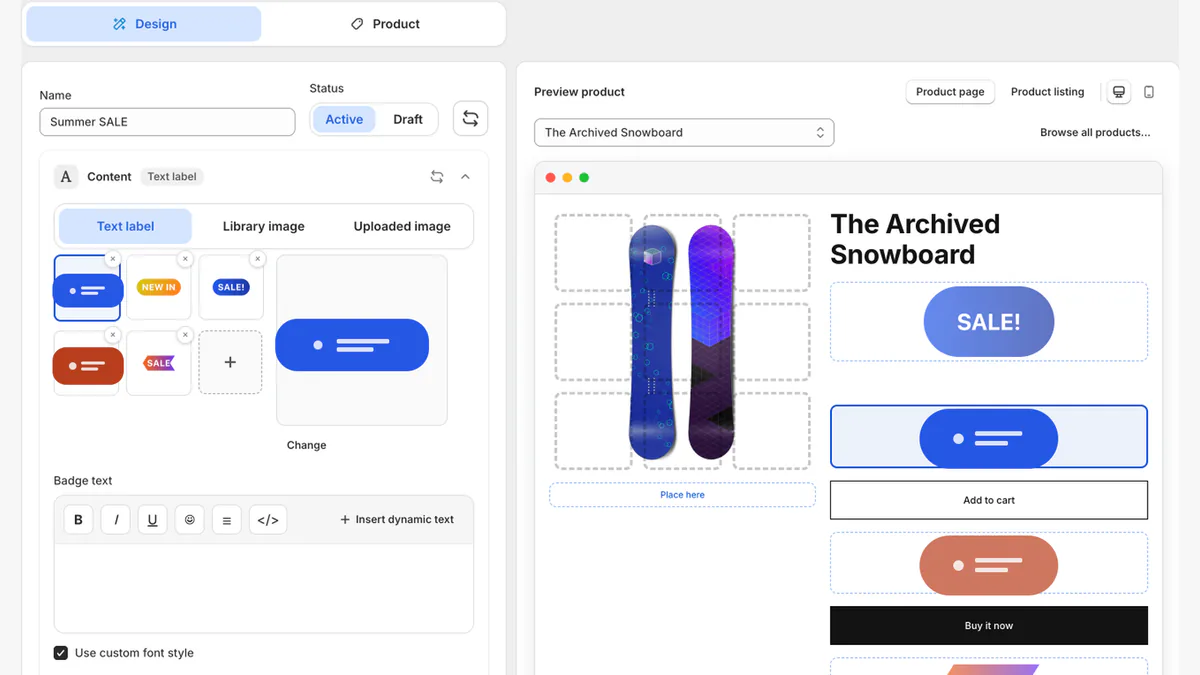
How to Add Product Labels to Shopify Without Code
Learn how to add product labels to Shopify without editing theme code, preview placement on desktop and mobile, publish safely, and verify the result.
DeepLumen Sep 04, 2026 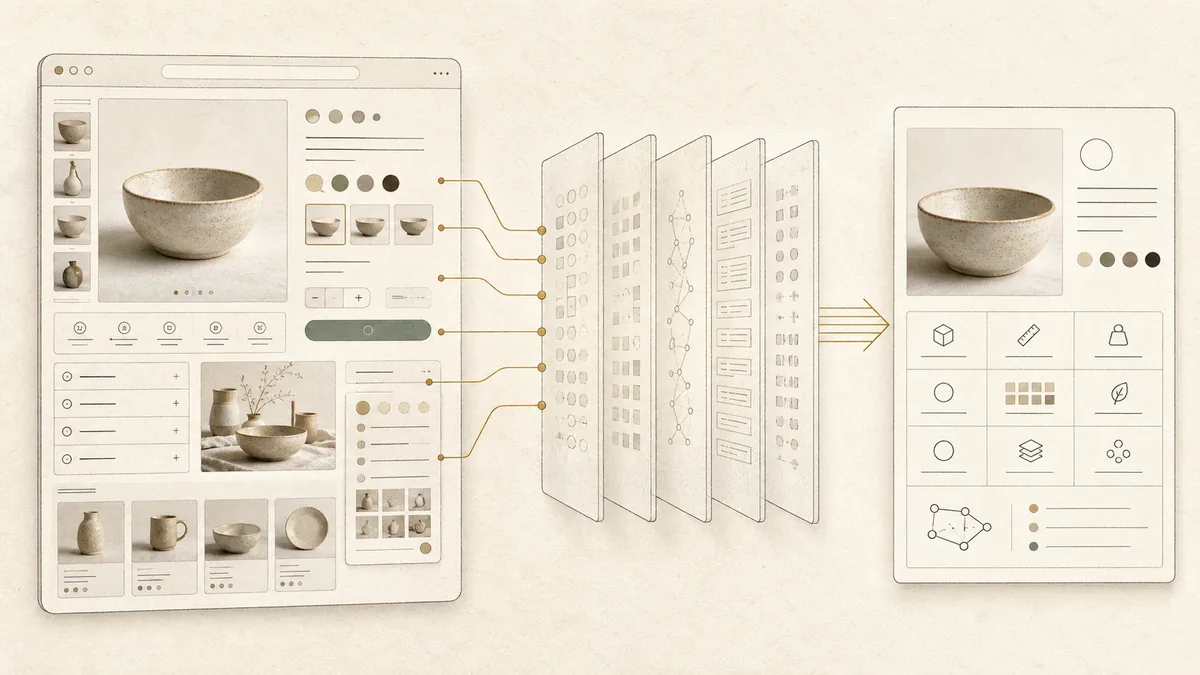
How Agentic Page Cuts Parsing Overhead for Shopify Catalogs
A reachable Shopify page can still be difficult to interpret. See how Agentic Page gives AI systems a clearer, structured product-data surface.
DeepLumen Sep 04, 2026 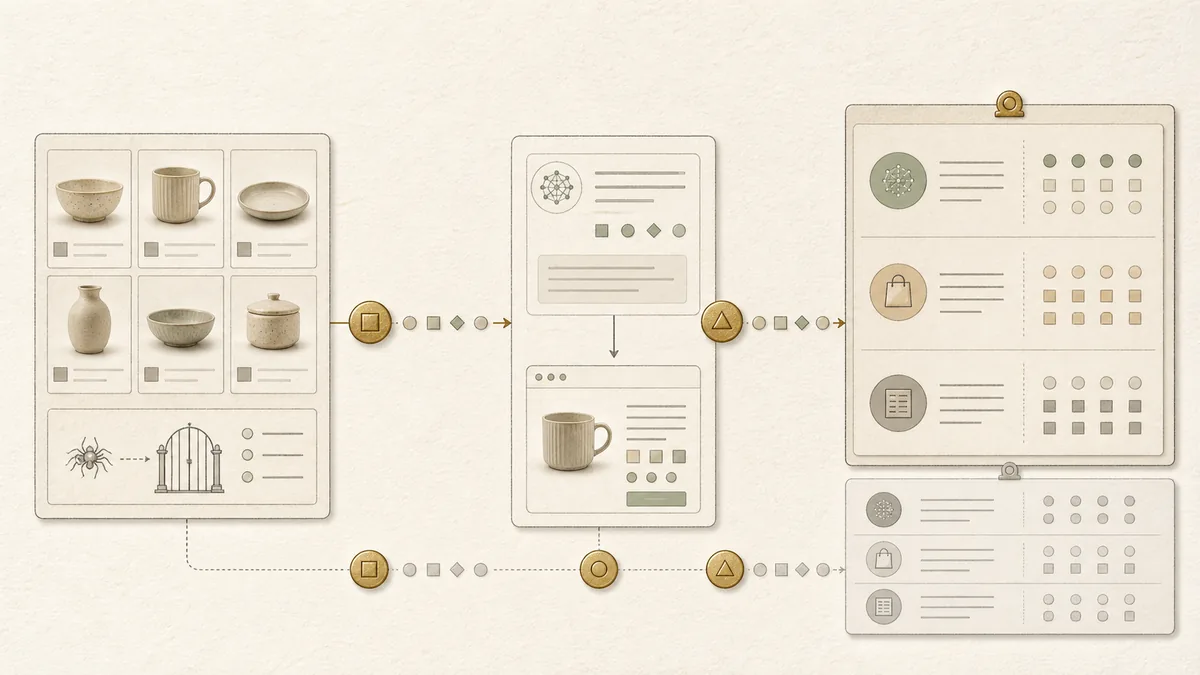
Proving AI-Driven Revenue: A Framework for Growth Teams
Growth teams can measure AI-mediated shopping in stages, but leadership wants a revenue story. Here's a framework to report both honestly.
DeepLumen Sep 04, 2026 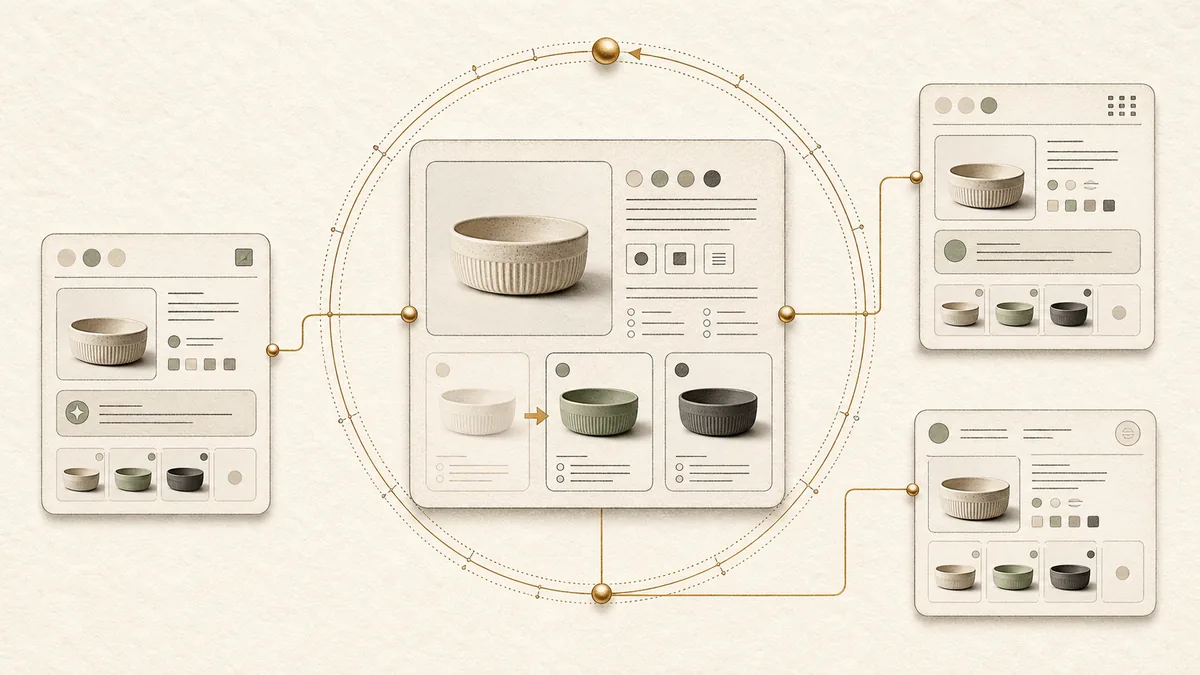
Why Product Data Freshness Matters More in AI Shopping
AI shopping interfaces can restate product facts outside the storefront. Learn why fresh product data matters and what Shopify teams should check.
DeepLumen Sep 04, 2026 
How Agentic Page Stays Readable Across AI Crawlers
AI discovery is now multi-platform and shifting fast. Agentic Page keeps product data readable across AI systems, without a separate fix per platform.
DeepLumen Aug 28, 2026 
How AI Answers Are Becoming a New Discovery Channel
AI-referred shopping traffic is climbing fast, as platforms rebuild around in-chat answers. Here's what the shift means for how products get found.
DeepLumen Aug 28, 2026 
Why AI Shopping Channels Don't Share the Same Economics
AI-mediated shopping isn't one channel with one cost structure. Recent data shows why growth plans need to treat each AI surface separately.
DeepLumen Aug 28, 2026 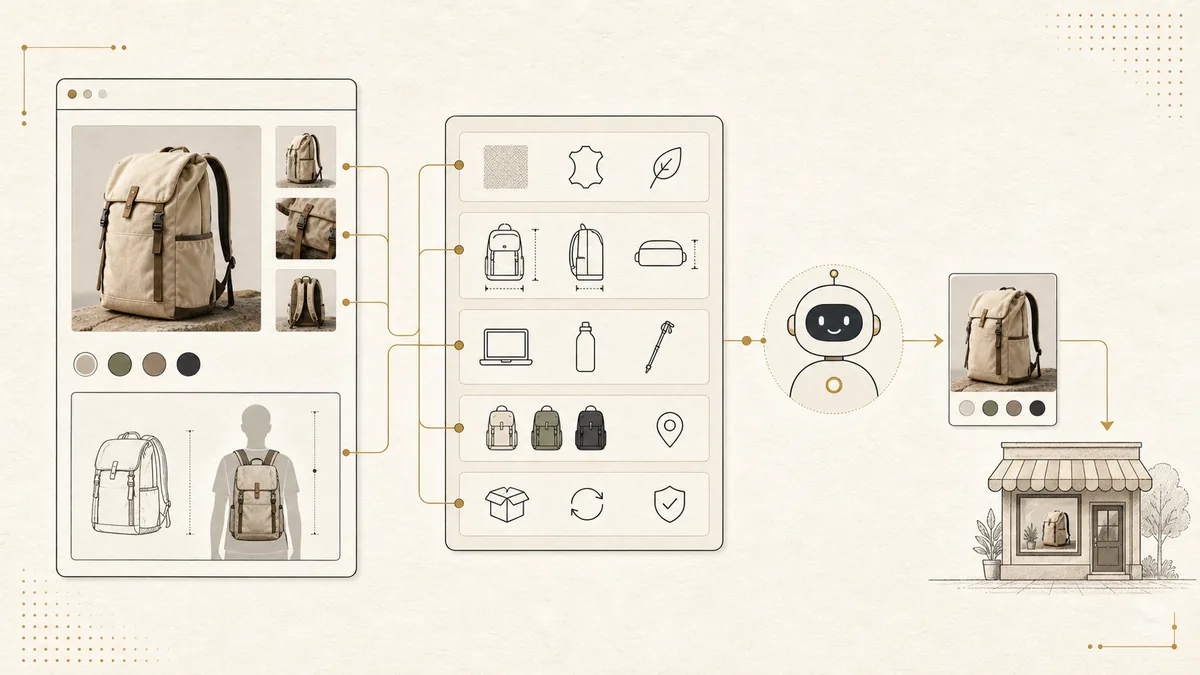
Why AI Commerce Starts With Product Understanding
AI assistants are becoming another layer in product discovery and evaluation. Before a product can be considered in that journey, its information needs to be clear enough for an AI system to use accurately.
DeepLumen Aug 19, 2026 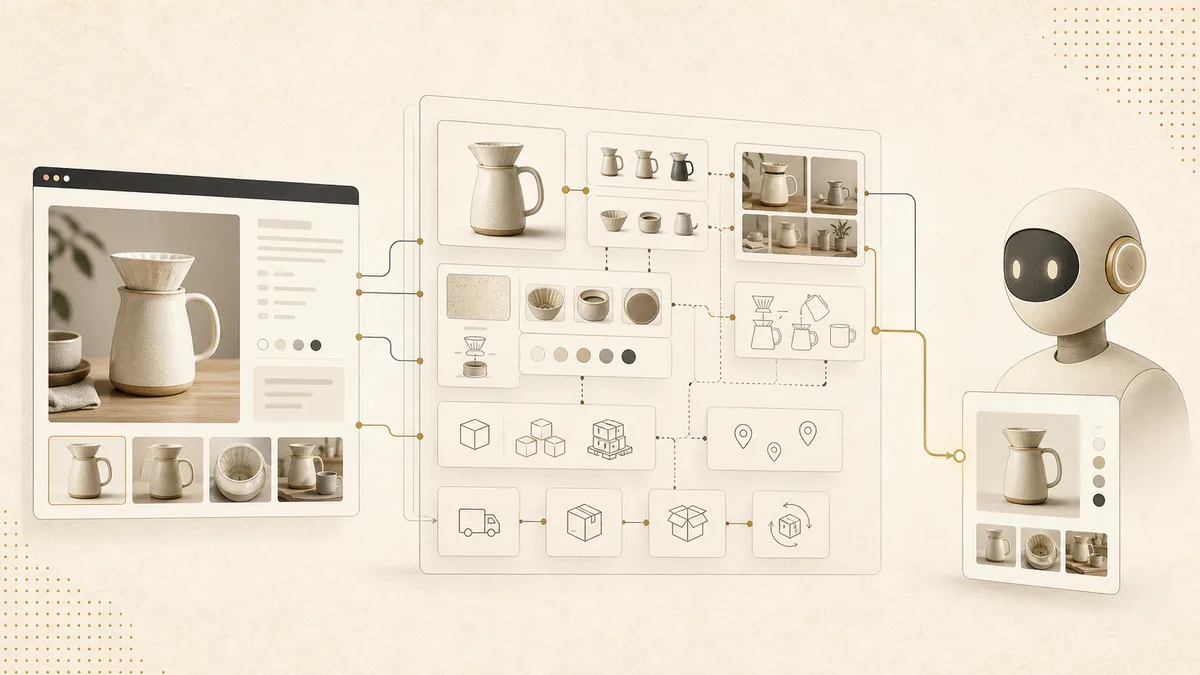
How Agentic Page Creates an AI-Readable Discovery Layer
Agentic Page helps Shopify merchants prepare product information for AI-mediated discovery. It focuses on the Discovery layer, while recommendation and commercial outcomes remain contextual and measurable questions.
DeepLumen Aug 19, 2026 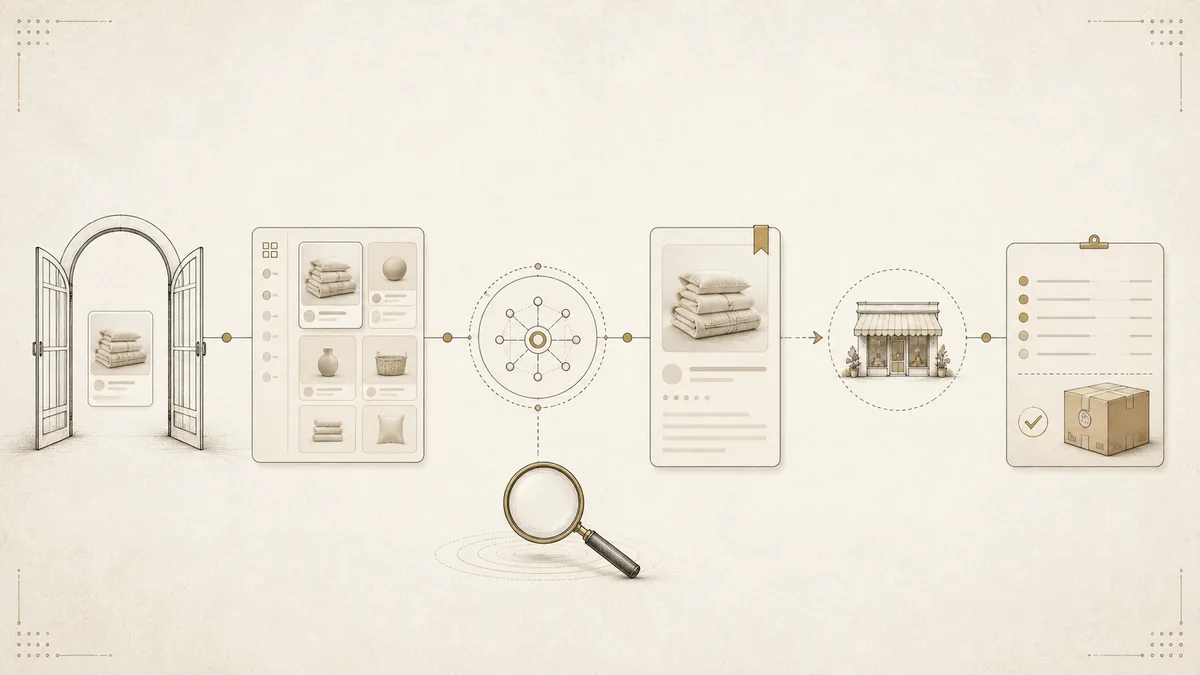
How Merchants Should Measure AI-Mediated Shopping
A single AI visibility score cannot explain a shopping journey. Merchants need a staged measurement model that separates access, retrieval, referral, and attributed outcomes.
DeepLumen Aug 19, 2026 
From Indexed to Ordered: What Four Numbers Say About the AI Discovery Funnel
DeepLumen's network data — 100% AI indexing, 659% crawler growth, +200% order growth, next-day orders — maps to four distinct stages of AI-driven discovery, each with its own caveats.
DeepLumen Aug 13, 2026 
1,000+ Merchants In: What a Network-Scale Number Actually Proves
DeepLumen's Agentic Page network passed 1,000 Shopify merchants in early August 2026 — a threshold that changes single-store evidence into a measurable network pattern.
DeepLumen Aug 13, 2026 
Shopify Says AI Orders Tripled — Here's a Real Closed Loop
Shopify confirms AI orders tripled in Q2 2026 — real proof is a full loop from AI discovery to attributed sales, already validated by merchant data.
DeepLumen Aug 13, 2026 
When Your Customer's AI Meets Your Store
A shopper's AI assistant may compare your products before they ever visit your store — Agentic Page makes that comparison possible to win.
DeepLumen Aug 07, 2026 
When AI Chat Replaces the Landing Page After an Ad Click
OpenAI is testing ads that open an AI conversation instead of a webpage — a shift that runs on the same AI-readiness question Agentic Page solves.
DeepLumen Aug 07, 2026 
AI Is Becoming a Shopping Channel, Not Just Information
Two new merchant data points show AI-driven visits converting into attributed sales — a signal that AI is shifting from research tool to shopping channel.
DeepLumen Aug 07, 2026 
Making Product Images and Video AI-Readable
Text markup alone isn't enough — a practical guide to describing product images and video so AI shopping agents can actually use them.
DeepLumen Jul 30, 2026 
Making Product Reviews and Ratings AI-Readable
Reviews shape what AI shopping agents recommend — but only if the rating data is structured, not just displayed on the page.
DeepLumen Jul 30, 2026 
AI Discoverability for Global Shopify Stores
Most AI-readability advice assumes one language and one currency. Here's what changes when a Shopify store sells across several of both.
DeepLumen Jul 30, 2026 
Make Your Shopify Store AI-Discoverable: A Practical Guide
Want ChatGPT and Perplexity to recommend your Shopify store? Here's the practical, step-by-step path that took two real merchants there.
DeepLumen Jul 24, 2026 
Beyond ChatGPT: How Gemini and Claude Evaluate Products
A look at how Google Gemini and Claude evaluate Shopify products differently from ChatGPT, and what that means for AI-readable catalogs.
DeepLumen Jul 24, 2026 
JSON-LD and llms.txt for Shopify: A Technical Setup Guide
A hands-on guide to the JSON-LD and llms.txt files that make a Shopify catalog AI-readable, and where Agentic Page fits in.
DeepLumen Jul 24, 2026 
$1,000+ in 7 Days, 100% Multi-Platform Indexing: Inside the Agentic Commerce Flywheel That Compounds AI Revenue
AI agents compound trust. Once a merchant gets recommended, converts, and gets recommended again, latecomers face an exponentially harder climb. Here's how the flywheel works and why early movers are pulling away.
 Joy Jul 16, 2026
90% AI-Invisible: The Discovery Gap Between $0 and $10K+ in Shopify AI Revenue
Nine out of ten brands are invisible to AI shopping agents. The merchants who closed the gap are now seeing $10K+ in ChatGPT-attributed revenue, 659% AI traffic growth, and 100% AI indexing. Here's what the gap is, why it exists, and how to close it.
Joy Jul 16, 2026 
Visa + OpenAI, Stripe Agent Wallets, Mastercard on Chain: How 3 Payment Giants Built AI Agent Payment Rails in 2026
Which payment networks are ready for AI agents? Compare Visa, Stripe, and Mastercard across credentials, protocols, wallets, stablecoins, and merchant support.
DeepLumen Jul 16, 2026 
Agentic Commerce Is Here: From Search-First to Agent-First, the Data Says the Shift Already Started
Agentic Commerce — the model where AI agents discover, compare, and transact on behalf of consumers — is already generating $10K+ in merchant revenue. Here's what the shift means, how it works, and why the infrastructure gap is your window.
DeepLumen Jul 10, 2026 
$10K+ ChatGPT Revenue, 659% AI Traffic Growth: Agentic Page Early Adopter Results Across 5 Verticals
Early Agentic Page merchants generated over $10,000 in ChatGPT-attributed checkout revenue, saw 659% AI traffic growth, and hit 100% AI indexing across GPTBot, PerplexityBot, and ClaudeBot. Vertical-by-vertical breakdown inside.
DeepLumen Jul 10, 2026 
From Keywords to Entities: How GPTBot, PerplexityBot and ClaudeBot Changed Shopify SEO in 2026
AI shopping agents don't match keywords — they reason about entities. Most Shopify stores are invisible to GPTBot and PerplexityBot because critical product data is client-rendered. Here are the 5 structural shifts and how to fix them.
DeepLumen Jul 10, 2026 
AI Traffic Is Not a Trend Anymore: What Shopify Brands Should Measure Before Calling It Revenue
AI traffic is becoming measurable inside the Shopify growth stack. This guide separates crawler access, user-triggered retrieval, AI referrals, assisted conversions, and product-level recommendation readiness.
DeepLumen Jun 29, 2026 
Your PDP Was Built for Humans. AI Agents Need a Product Context Pack.
Shopify PDPs are built for visual conversion. AI shopping agents need a compact product context pack that exposes facts, use cases, trust evidence, offer state, and structured markup.
DeepLumen Jun 29, 2026 
ChatGPT Product Recommendation Readiness Audit for Shopify Stores
A practical audit framework for Shopify teams that want to know whether ChatGPT and AI shopping agents can discover, understand, compare, trust, and recommend their products.
DeepLumen Jun 29, 2026 
Best Shopify Apps for AI-Readable Product Pages: What to Look For in 2026
A practical buyer guide for Shopify brands evaluating apps that generate AI-readable product pages, Agentic Pages, and product-level context for ChatGPT, Perplexity, and AI shopping agents.
DeepLumen Jun 29, 2026 
How AI Shopping Agents Match Shopper Prompts to Shopify Products
A practical guide for Shopify merchants on how AI shopping agents translate shopper prompts into product matches, why catalog inclusion is not enough, and how AI-readable product context improves recommendation readiness.
DeepLumen Jun 26, 2026 
Product Schema vs Agentic Pages: What Shopify Merchants Actually Need for AI Recommendations
Product schema helps search engines and AI systems recognize product facts. Agentic Pages add the product context layer ChatGPT and AI shopping agents need before they can recommend Shopify products.
DeepLumen Jun 25, 2026 
Shopify Catalog vs AI-Visible Product Pages: Why Inclusion Is Not Enough
A practical guide for Shopify merchants on the difference between Shopify Catalog inclusion and AI-visible product pages that help ChatGPT, Perplexity, and AI shopping agents recommend products.
DeepLumen Jun 24, 2026 
Best Shopify Apps for AI-Visible Product Pages
A practical guide to choosing Shopify apps that generate AI-visible, AI-readable product pages and Agentic Pages so ChatGPT and Perplexity can understand and recommend products.
DeepLumen Jun 23, 2026 
Why ChatGPT Does Not Mention My Shopify Store
If you ask ChatGPT for the best product in your category and your store never comes up, it is almost never a quality problem and almost never a penalty. It is a readability, retrieval, and trust problem — and each part is observable.
DeepLumen Jun 22, 2026 
Why AI Recommends Amazon Over DTC Brands
When a shopper asks an AI for “the best” product, large retailers win the default answer — not because their products are better, but because their data is easier to read, verify, and trust at scale. Here is the mechanism, and why the gap is starting to close for DTC.
DeepLumen Jun 22, 2026 
Why Perplexity Skips Your Products
Perplexity is a live-retrieval, citation-driven engine. When it skips your products, it is not a ranking penalty — your pages failed one of five gates the moment Perplexity tried to read and cite them. Here is the diagnosis.
DeepLumen Jun 22, 2026 
Why AI Cannot Read Your Reviews
Reviews are the strongest trust signal you own, and AI ignores most of them. Not because they are weak, but because they sit in a format an assistant cannot read, verify, or connect to the product it is recommending. Here is the diagnosis.
DeepLumen Jun 22, 2026 
Why Your Product Specs Disappear in AI Answers
When an AI cannot find a spec it needs, it does not guess — it moves to a product that has the answer. Your specifications “disappear” because they are buried in prose, only partly structured, inconsistent across channels, or scattered across disconnected systems. Here is the diagnosis.
DeepLumen Jun 22, 2026 
Product Truth Beats Product Copy in AI Shopping
AI shopping agents do not reward vague product copy. They reward explicit product truth: structured attributes, current offer state, use-case fit, policy clarity, evidence, and low-noise corpus units.
DeepLumen Jun 18, 2026 
AI Health Score Is Not a Vanity Metric: How Shopify Teams Improve Agentic Commerce Readiness
A practical guide to using AI Health Score for Shopify AI visibility, corpus unit reduction, AI readability, and agentic commerce readiness.
DeepLumen Jun 17, 2026 
Agentic Commerce Protocol Comparison: ACP vs UCP vs AP2 vs llms.txt vs Agentic Page
A practical agentic commerce protocol comparison covering ACP, UCP, AP2, Shopify Catalog, llms.txt, agents.md, structured data, and Agentic Page.
DeepLumen Jun 16, 2026 
Agentic Commerce Statistics 2026: Benchmarks, Signals, and Readiness Metrics
Agentic commerce statistics for 2026: platform signals, AI shopping benchmarks, crawler coverage, ChatGPT retrievals, recommendation readiness, and ecommerce metrics.
DeepLumen Jun 16, 2026 
AI Shopping Agent Optimization Checklist: Benchmark Your Ecommerce Readiness
A 100-point AI shopping agent optimization checklist for ecommerce teams: access, catalog consistency, structured product facts, corpus unit efficiency, and recommendation readiness.
DeepLumen Jun 16, 2026 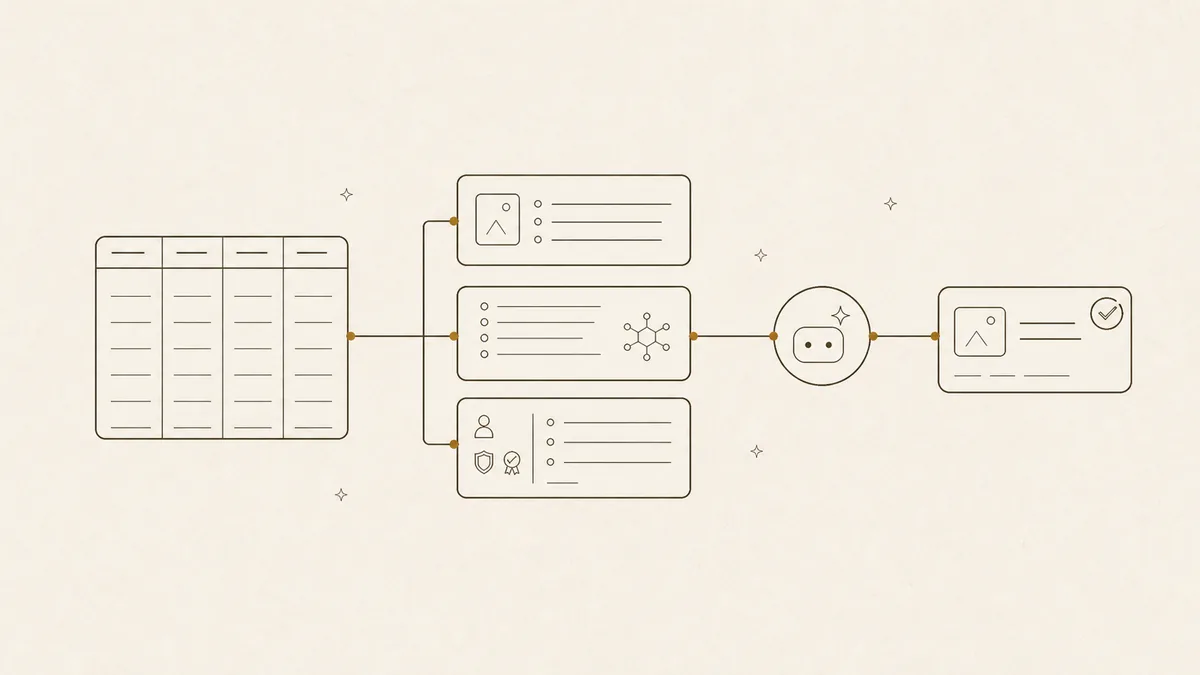
AI Product Feed Optimization for Agentic Commerce
Product feeds are becoming important again, but not in the old Google Shopping sense. In agentic commerce, a feed can get a product into the room. It cannot, by itself, make the product understandable enough to be recommended.
DeepLumen Jun 12, 2026 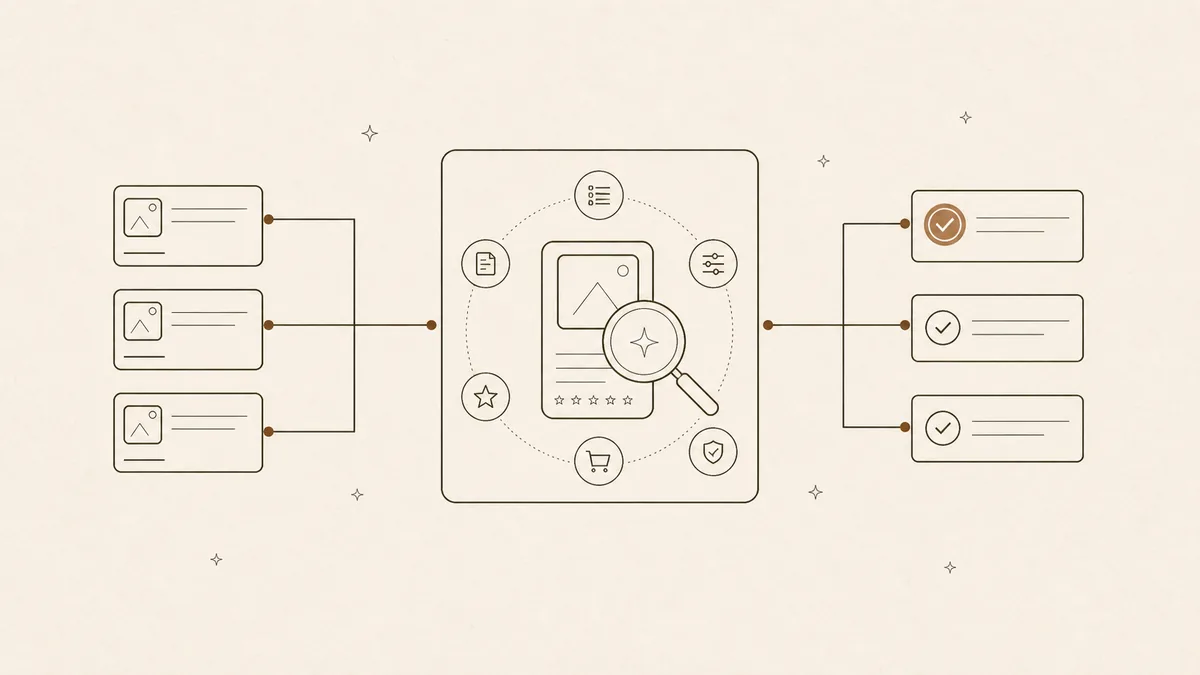
How AI Shopping Agents Evaluate Products
The next ranking layer in ecommerce is not only a search results page. It is an AI agent deciding which products are clear enough, trustworthy enough, and relevant enough to recommend.
DeepLumen Jun 12, 2026 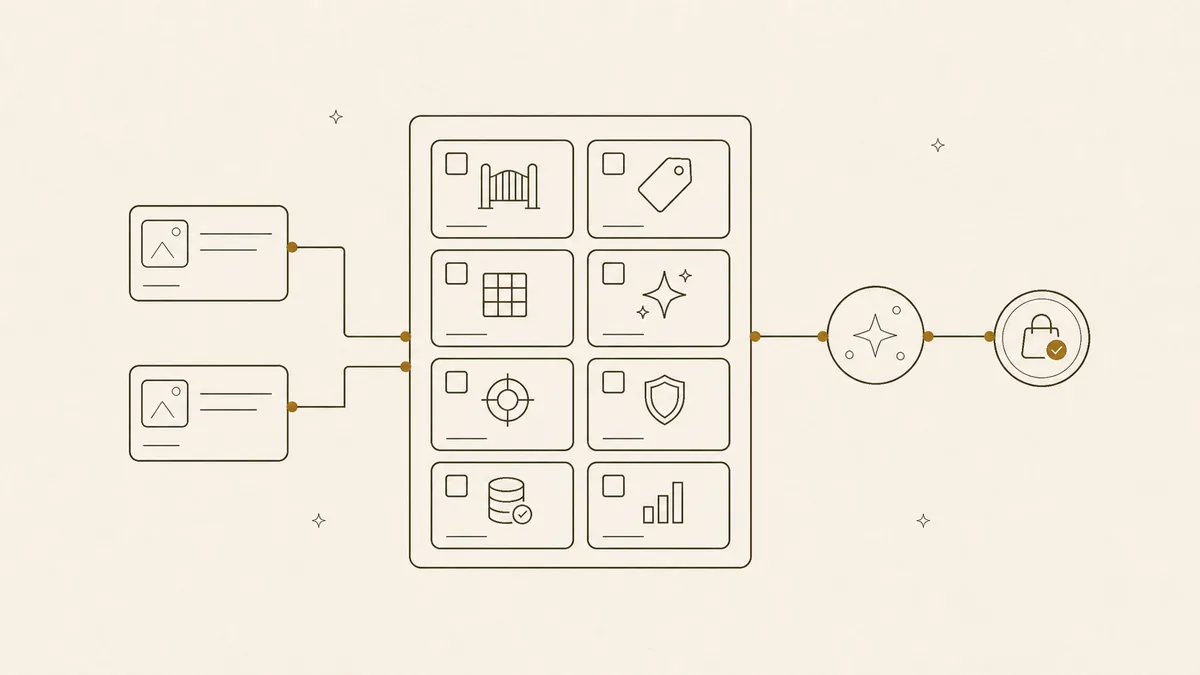
Agentic Commerce Readiness Checklist for Ecommerce Teams
AI shopping agents do not reward the store that merely exists in a catalog. They reward the store that can be found, understood, compared, trusted, and selected for a specific shopper intent.
DeepLumen Jun 12, 2026 
What Is Agentic Commerce? Definition, Examples, and Ecommerce Impact
Agentic commerce does not begin at checkout. It begins when an AI agent decides which products are worth considering, which brands can be trusted, and which merchants are readable enough to recommend.
DeepLumen Jun 11, 2026 
AI Crawler Governance for Ecommerce: What to Allow, What to Separate, and What to Measure
AI crawler governance is no longer a narrow robots.txt decision. For ecommerce, it is the operating model for separating search crawlers, model crawlers, user-triggered agents, catalog distribution, agent discovery files, and recommendation readiness.
DeepLumen Jun 11, 2026 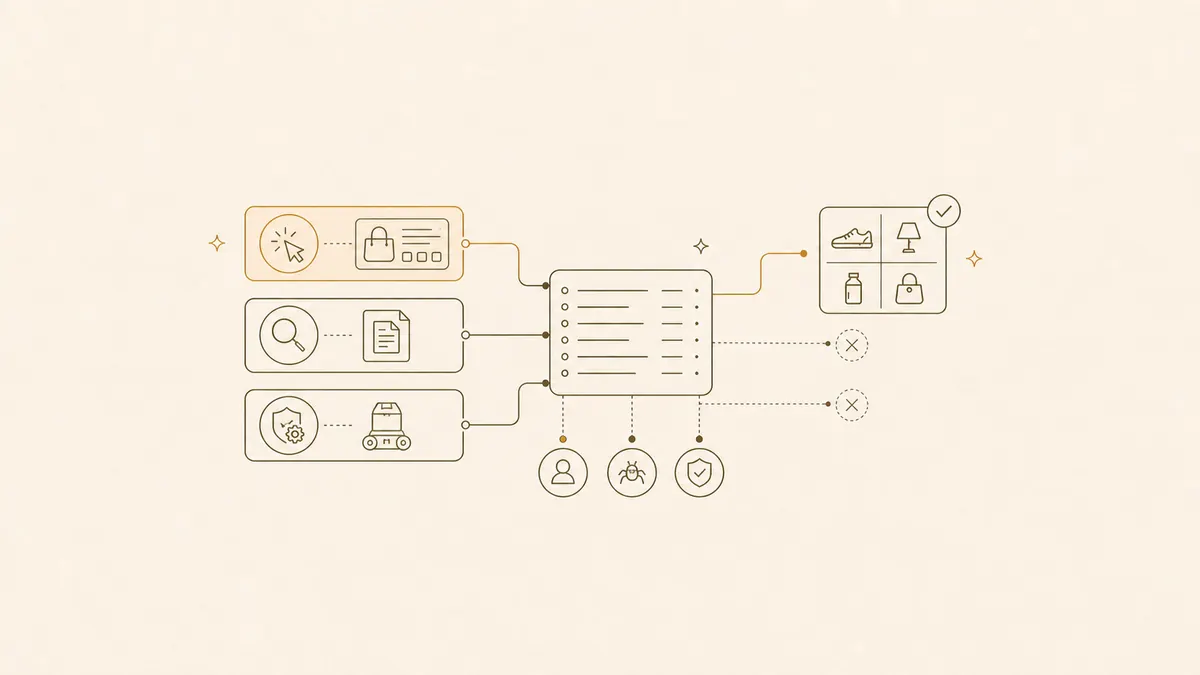
ChatGPT-User vs OAI-SearchBot vs GPTBot: What Ecommerce Teams Should Track
A practical ecommerce guide to reading ChatGPT-User, OAI-SearchBot, and GPTBot traffic logs without confusing crawl access with live AI shopping intent.
DeepLumen Jun 10, 2026 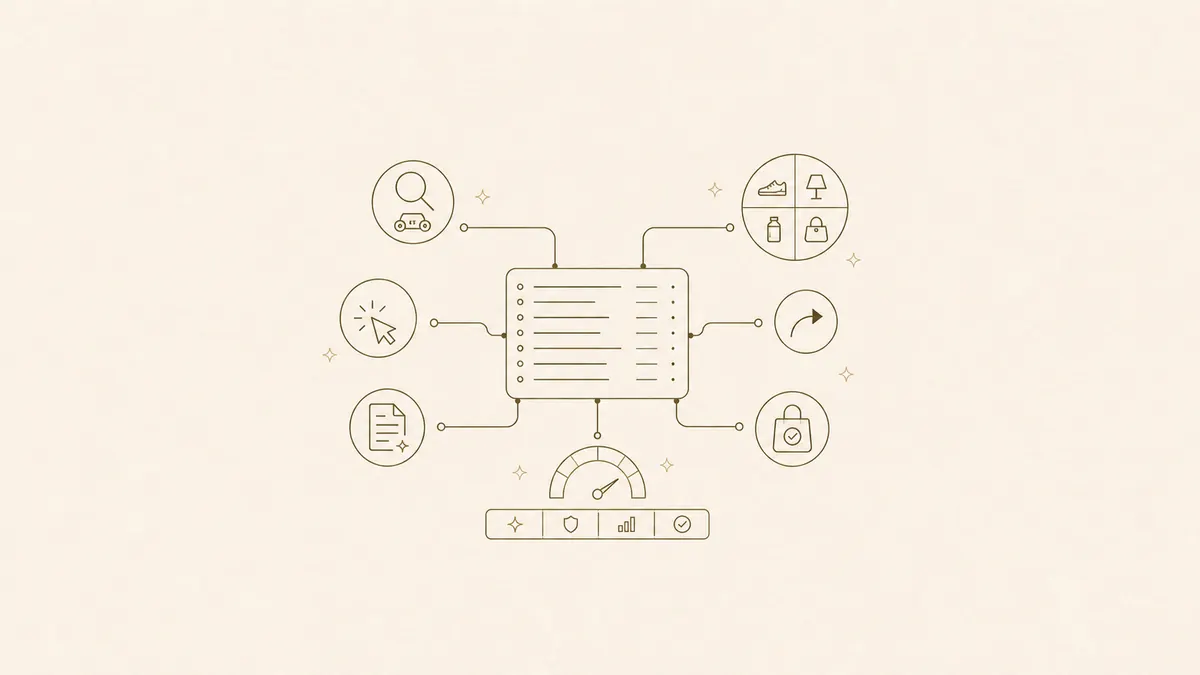
AI Traffic Logs for Ecommerce: ChatGPT-User, OAI-SearchBot, Shopify Catalog, and What They Actually Mean
AI visits are not one signal. Search crawlers, user-triggered agents, catalog feeds, agent discovery files, referrals, and checkout events all mean different things for ecommerce growth.
DeepLumen Jun 09, 2026 
Get Recommended by AI Shopping Agents: The Ecommerce Readiness Playbook
AI shopping agents do not reward the prettiest storefront. They recommend the product they can discover, understand, compare, trust, and route to purchase with the least ambiguity.
DeepLumen Jun 08, 2026 
AI Search Visibility Is Not a Score: The Ecommerce Readiness Layer
AI search visibility scores show if brands appear in AI answers. Ecommerce readiness determines whether products are AI-readable and recommendation-ready.
DeepLumen Jun 08, 2026 
Shopify Catalog vs Agentic Page vs llms.txt: What Each Layer Actually Solves
Shopify Catalog, Agentic Page, and llms.txt solve different AI visibility jobs. Learn what each layer does and why recommendation readiness needs all three.
DeepLumen Jun 08, 2026 
Magarri Case Study: AI Citations up 268%, ChatGPT Head-to-Head vs. Legacy Brands 0% → 35% with Agentic Page
See how at-home massage brand Magarri used Agentic Page to lift AI citations by 268% and appear in 35% of ChatGPT comparisons vs. legacy brands like Earthlite and Master Massage. Free case study with the Competitor Hedging Graph playbook inside.
Joy Apr 23, 2026 
ACCC Scoring System: Turn AI Search Visibility into a Measurable 100-Point KPI
Agentic Page's ACCC scoring system gives brands a 100-point, 4-dimension framework to measure AI search visibility — covering Accessibility, Crawlability, Content Structure, and Content Quality. Free diagnostic and benchmark report inside.
Joy Apr 23, 2026 
1988 Coffee Estate Case Study: AI Citations up 186%, Non-Branded Brand Presence up 320% in AI Search with Agentic Page
See how 1988 Coffee Estate used Agentic Page's GEO platform to lift AI citations by 186% and non-branded brand presence by 320% across ChatGPT, Perplexity, and Claude. Free case study with the full implementation playbook inside.
Joy Apr 23, 2026 
Looktech Case Study: AI Citations up 210%, ChatGPT Share of Voice Tripled vs. Ray-Ban Meta with Agentic Page
See how CES 2025 challenger Looktech used Agentic Page to lift AI citations by 210% and triple ChatGPT share of voice against Ray-Ban Meta and other incumbents. Free case study with the Competitor Hedging Graph playbook inside.
Joy Apr 23, 2026